
COMMENTARY: Anthropology is the study of how people actually live — and few forces have quietly rearranged daily life in small American cities like the global supply chain behind a big-box store. In Jackson, Michigan, a single shopping trip can now touch farms, factories, ports, and warehouses across several continents before it reaches a shelf. This piece is a balanced explainer of what that means for jobs, for Main Street, and for the habits of the people who live here — not a brief for or against any company.
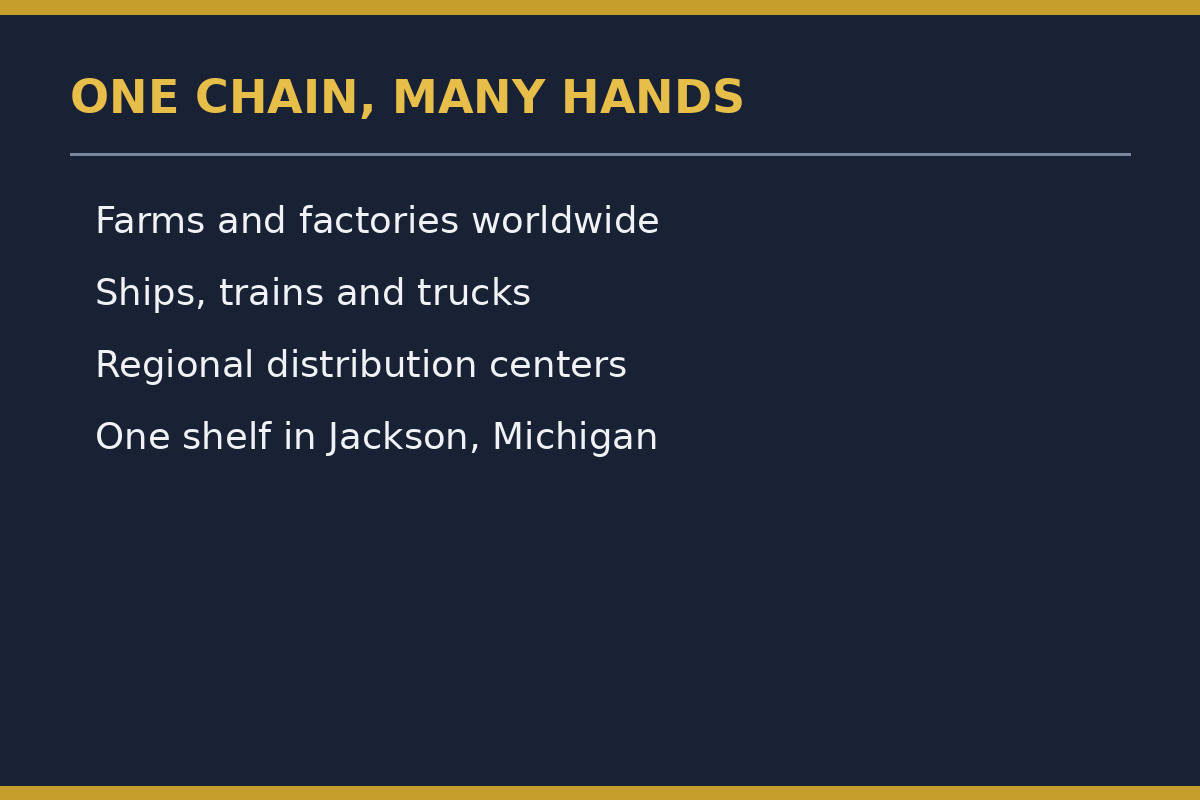
The supply chain itself is the first thing to see clearly. A global chain is a relay: raw materials and finished goods move by ship, rail, and truck through distribution centers to stores, coordinated tightly enough that shelves refill as a routine rather than an event.
The Argument
FACT: A global supply chain trades local self-sufficiency for scale: goods arrive cheaper and more consistently, while the work of making and moving them concentrates in fewer, larger places.
COMMENTARY: The argument here is about habits more than economics. When one store can supply most of a household’s needs at almost any hour, shopping stops being a round of relationships — the butcher, the hardware counter, the pharmacist who knows your name — and becomes a single efficient errand. Jackson feels both sides of that trade every week: real convenience and real savings on one side, real pressure on independent stores on the other.
The Chain Behind the Shelf
Understanding the chain explains the prices. Buying at enormous scale lowers per-unit costs; standardized logistics lower them again. For Jackson households working with tight budgets, that difference is not abstract — it is groceries, school supplies, and medicine costing less, in one trip, with predictable stock. The jobs picture is similarly two-sided in general terms: big-box retail and its warehouses and trucking are significant employers, while the chain’s efficiency is part of why some smaller competitors, selling the same goods at higher cost, struggle to hold their share.
How a Global Chain Changes Daily Habits
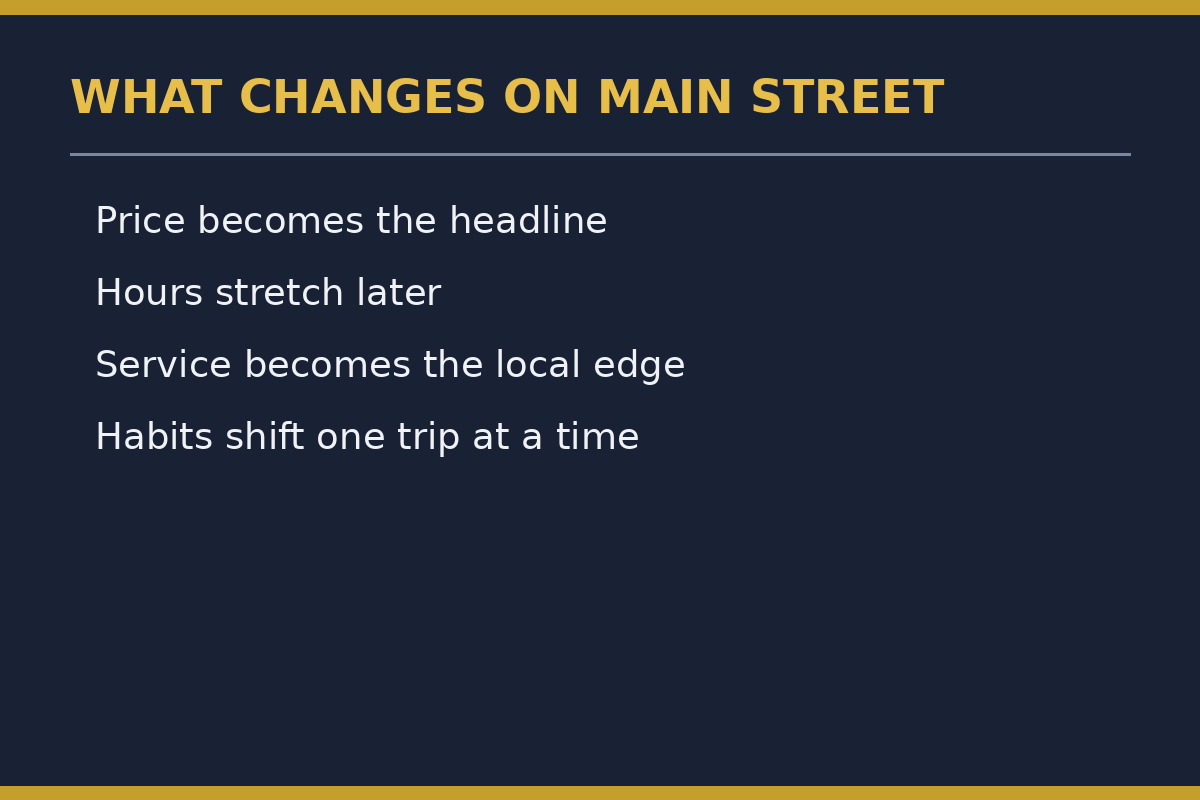
The anthropological changes are the subtle ones. Shopping hours stretch; the weekly rhythm of specialized trips flattens into one big run. Brand loyalty gives way to price-and-availability loyalty. Work habits shift too — toward shift schedules set by logistics, and toward service jobs over making jobs. None of this is unique to Jackson; it is the common small-city experience of the last several decades, visible from Albion to almost any county seat in the Midwest. Naming it honestly is the first step to choosing, as a community, what to keep from the older pattern.
What Main Street Does Differently
The local businesses that thrive alongside a global chain generally stop competing on the chain’s terms. They sell what a warehouse cannot: repair knowledge at the counter, special orders handled by a person, goods made or sourced nearby, and the simple fact of being known. Jackson and Albion independents lean into service, specialty, and trust — the parts of commerce that do not fit in a distribution center. That is not nostalgia; it is a sound division of labor that many small cities are relearning.
Frequently Asked Questions
What is a global supply chain, in plain terms?
The linked system that moves goods from producers around the world — by ship, rail, and truck, through distribution centers — to a local store shelf, coordinated so products arrive steadily and at low cost.
How does it affect Jackson, Michigan jobs?
In general terms, both ways: retail, warehouse, and trucking work grows around large stores, while smaller stores selling identical goods at higher cost face pressure. The balance differs by town and by trade.
Why do shoppers choose big-box stores?
Mostly price, one-trip convenience, long hours, and predictable stock — advantages that matter a great deal to households on tight budgets.
How do local businesses compete?
By offering what scale cannot: expertise, service, repairs, special orders, local products, and personal trust — in Jackson and Albion alike, that is the durable local edge.
Want Jackson’s top local stories in one place? Browse the businesses shaping the area in the NeighborClick Local directory — JOIN the FREE Private Insider List for local stories, business spotlights, community updates and even if you don’t have business you’ll be an Insider.


Comments