
Speed has always had a price in lending, and the price has always been worth reading before paying it. Stagecoaches charged more than freight wagons. Telegraph-era money orders cost more than a letter. Every generation of finance invents a faster way to move money to a business, and every generation of business owners has to relearn the same old question: is the speed worth what it costs — this time, for this need?
Today’s instant funding offers — decisions in hours, money in a day or two — are the latest chapter of that history. This piece is caution-first and educational only. It makes no promises about speed or approval, because no honest piece can: offers, eligibility, and timing vary by funder and by business. What it can do is show where fast genuinely helps, where it quietly harms, and how to tell the difference before signing.
The Argument
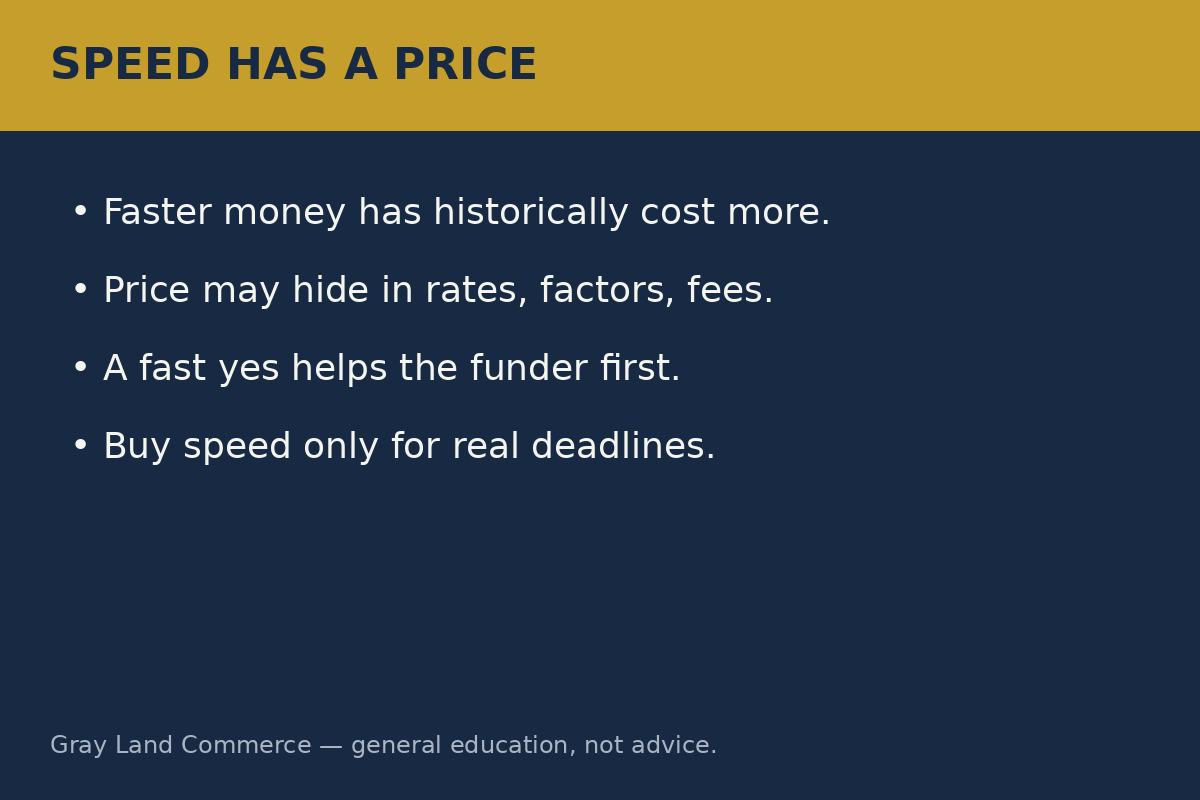
FACT: Across lending history, faster access to money has generally carried higher total cost than slower, more documented borrowing — the pattern runs from frontier credit to modern online funding. Speed is a feature that is paid for, whether the price is shown as a rate, a factor, or fees.
COMMENTARY: The argument is not ‘never borrow fast.’ It is that speed should be bought deliberately, for a need that is itself time-sensitive — never bought by default because the offer arrived quickly and the paperwork was easy. A fast yes is a sales advantage for the funder. It is only a business advantage for the owner when the opportunity being funded is worth more than the premium the speed carries.
When Fast Can Genuinely Help
There are honest cases. A signed contract that requires materials this week, where the profit comfortably exceeds the funding cost. A broken essential — the cooler, the truck, the register system — where every closed day costs more than the financing premium. A time-limited purchase, like discounted inventory, where the arithmetic is checked on paper rather than felt in the chest. In each case the pattern is the same: the use of funds is specific, the return is calculable, the repayment fits an ordinary month, and the owner can state the total cost in dollars before signing.
Notice what those cases share: the deadline is real, and it belongs to the opportunity — not to the offer. When a funder’s deadline (‘this rate expires today’) is the only urgency in the room, history’s advice is consistent: the urgency is manufactured, and the right speed is slower.
When to Slow Down
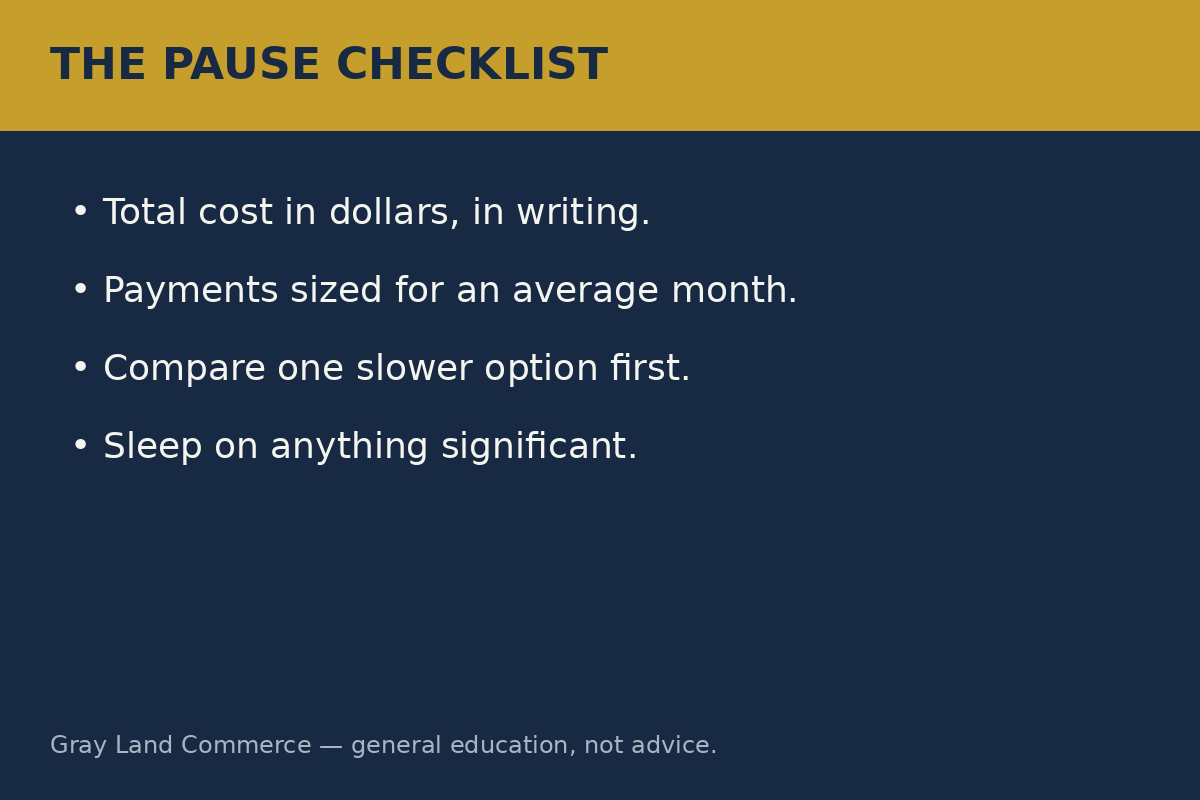
Slow down when the funding would cover recurring losses rather than a specific opportunity — fast money borrowed to fill a structural hole returns as a bigger hole with payments attached. Slow down when the total cost cannot be stated plainly, when payments are daily or weekly in amounts sized for your best month rather than your average one, or when signing personally pledges more than the opportunity is worth. And slow down, especially, when you are tired, behind, or frightened: lenders have known since the days of the company store that a pressed borrower signs what a rested one would read twice.
The practical pause is short and unglamorous: get the total cost in dollars, in writing; sleep on anything above a trivial amount; compare at least one slower option, even roughly, so the premium for speed is a known number rather than a hidden one. Owners in Jackson, Michigan have the same tools owners have always had — arithmetic, counsel, and time. Fast funding removes the third by design. Taking it back is the whole skill.
Frequently Asked Questions
Is instant business funding ever a good idea?
It can be, when the need is genuinely time-sensitive, the return is calculable, and the total cost in dollars is known and fits the business’s ordinary cash flow. It is a poor fit for covering ongoing losses or vague needs.
Why does fast funding usually cost more?
Historically and today, speed reduces the funder’s time to verify and raises their risk, and that risk is priced into the offer — as rates, factors, or fees. Faster and easier has almost always meant more expensive overall.
What should I check before accepting a fast offer?
The total cost in dollars over the full term, the payment amount and frequency, what happens in a slow month, any personal guarantee, and the cost of ending early — all in writing, compared against at least one slower alternative.
Does this article promise approval or funding speed?
No. It is general education only. Offers, eligibility, and timing vary by funder and business, and nothing here guarantees approval, speed, or terms. Funding decisions belong with qualified advisors who know your full picture.
Want Jackson’s top local stories in one place? Browse the businesses shaping the area in the NeighborClick Local directory — JOIN the FREE Private Insider List for local stories, business spotlights, community updates and even if you don’t have business you’ll be an Insider.


Comments