
Long before advertising was an auction run by algorithms, it was a barn-raising. Neighbors who could not each afford a thing alone — a fence, a harvest crew, a church roof — pooled what they had and built it together. A shared commercial is the same instinct in modern dress: five to ten local businesses split the cost of one professionally made 60-second spot, each getting a segment no one could have justified alone, all of them carried further by the group than any one of them would travel solo.
This is a look at how that cooperation actually works in practice for Jackson, Michigan businesses — the structure, the fairness rules, and the honest limits. It promises no income and no specific results; what cooperation reliably multiplies is exposure and affordability, and those two are worth having.
The Argument
COMMENTARY: The argument is anthropological before it is financial: communities have always solved ‘too expensive alone’ with ‘affordable together.’ A co-op commercial works when it is run like the old cooperative institutions — clear shares, clear turns, decisions made in the open — and fails when it is run on handshakes and hurt feelings. Structure is not the enemy of neighborliness; it is what lets neighborliness survive contact with money.
A Practical Structure That Works
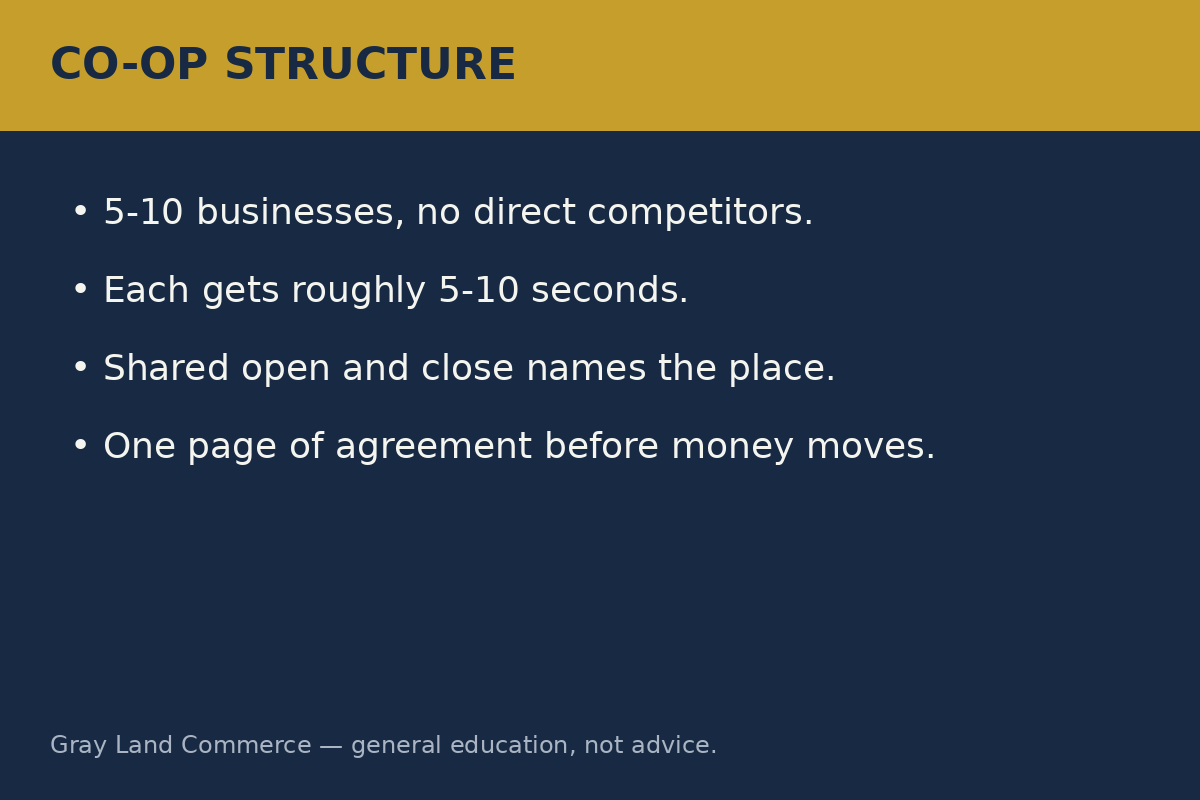
Start with fit: businesses that share a customer but not a product — a bakery, a florist, a hardware store, a salon, a café — so nobody in the spot competes with anybody else in it. Five to ten members keeps each share affordable while keeping each segment long enough to register: in a 60-second spot, that means roughly five to ten seconds per business plus a shared open and close that names the group and the place — ‘your neighbors on Michigan Avenue,’ or the Jackson businesses of a particular district.
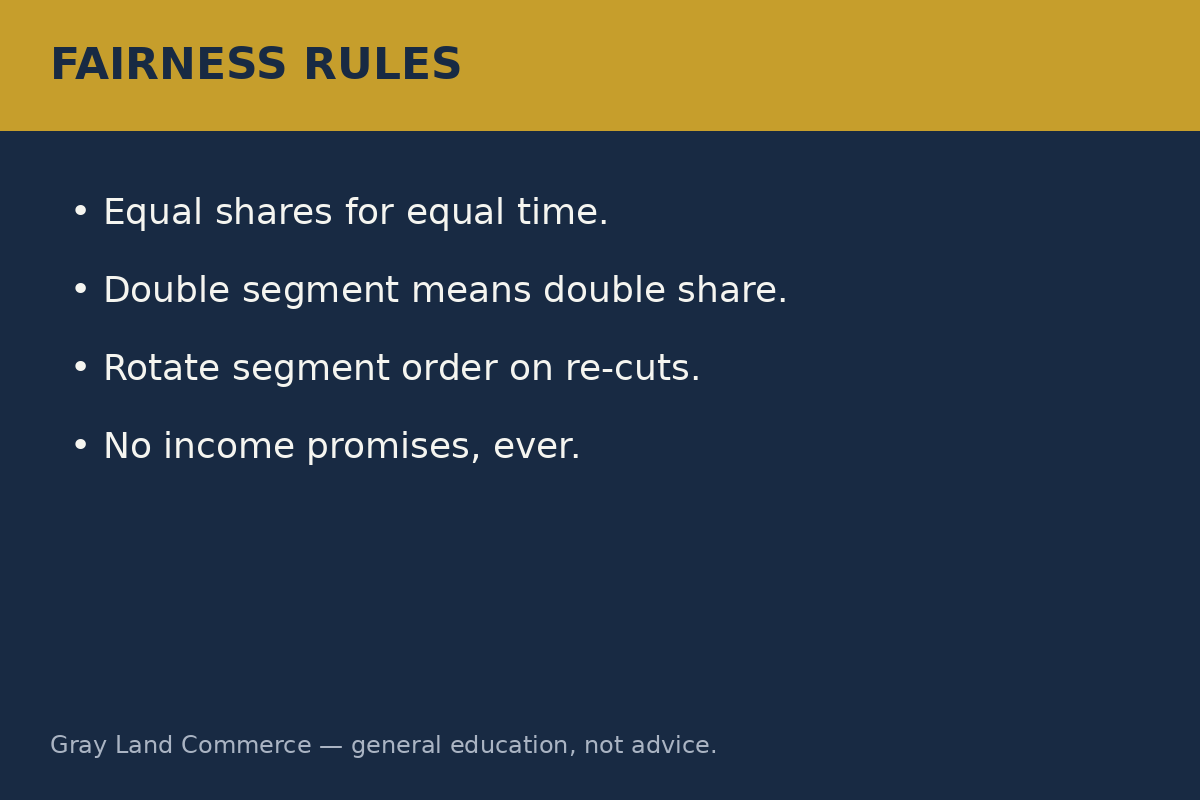
Put one page of agreement in writing before money moves: the total production and placement cost, each member’s equal or clearly tiered share, what each segment includes, who approves the final cut, where the spot will run and for how long, and what happens if someone wants out. Equal shares with equal seconds is the simplest fair rule; if one business takes a double segment, it pays a double share. Rotate the order of segments between versions if the spot is re-cut, so the same business is not always first or always last.
Why the Reach Multiplies — Honestly
The multiplication is real but modest in mechanism, and it is worth stating plainly. Each member shares the finished spot with its own customers — its counter, its social pages, its email list — so the same production appears in five to ten trusted places instead of one. A customer who trusts the café watches long enough to meet the florist. That borrowed trust, repeated across a group, is the actual engine; a co-op spot is not magic, it is introductions at scale. What it cannot do is guarantee sales, and any version of this idea sold with income promises should be walked away from.
There is also a quieter benefit anthropologists would recognize: the group itself becomes a network. Businesses that have made something together refer customers to each other, share warnings and supplier tips, and show up for each other’s slow seasons. The commercial may run for a month; the alliance tends to last longer. For many Jackson owners, that network ends up worth more than the airtime.
Frequently Asked Questions
How much does each business pay in a shared commercial?
Each member pays its agreed share of the total production and placement cost — commonly an equal split among five to ten businesses, or a tiered split if some take longer segments. The exact amounts depend on the production and placement chosen, and should be fixed in writing before work begins.
How long does each business get in a 60-second spot?
With five to ten members and a shared opening and closing, each business typically receives roughly five to ten seconds — enough for a name, one clear offer or image, and a location cue. Short and memorable beats long and detailed.
What keeps a co-op commercial fair?
A one-page written agreement: equal shares for equal time, segment order rotated on re-cuts, group approval of the final version, and clear terms for where the spot runs and what happens if a member leaves.
Does a shared commercial guarantee more sales?
No. It widens exposure and lowers each business’s cost of professional advertising, and members cross-promote to each other’s customers. Sales depend on the businesses themselves, and honest co-ops make no income promises.
Want Jackson’s top local stories in one place? Browse the businesses shaping the area in the NeighborClick Local directory — JOIN the FREE Private Insider List for local stories, business spotlights, community updates and even if you don’t have business you’ll be an Insider.


Comments