
Working capital is the money a business uses for everyday operations — payroll, inventory, rent, and the gap between doing the work and getting paid for it. When owners in Jackson, Michigan look at borrowing in the $50,000 to $250,000 range, they are usually not chasing luxury; they are funding a busy season, a hire, a piece of equipment’s supporting costs, or breathing room that keeps a good business steady.
This field guide is educational only. It compares loan types in general terms, explains what lenders commonly review, and lists the questions worth asking before signing anything. It does not recommend specific lenders, quote rates as facts, or promise approval — no honest guide can, because terms depend on the business, the lender, and the paperwork in front of them.
The Argument
FACT: ‘Working capital loan’ is a purpose, not a single product. The same need can be met by a term loan, a line of credit, revenue-based funding, or other structures, and the total cost and obligations differ significantly between them.
COMMENTARY: The no-nonsense position is simple: the best working capital loan is rarely the fastest or the one with the biggest headline number. It is the one whose total cost, payment shape, and obligations fit the business’s actual cash rhythm — verified in writing, compared side by side, before anyone signs.
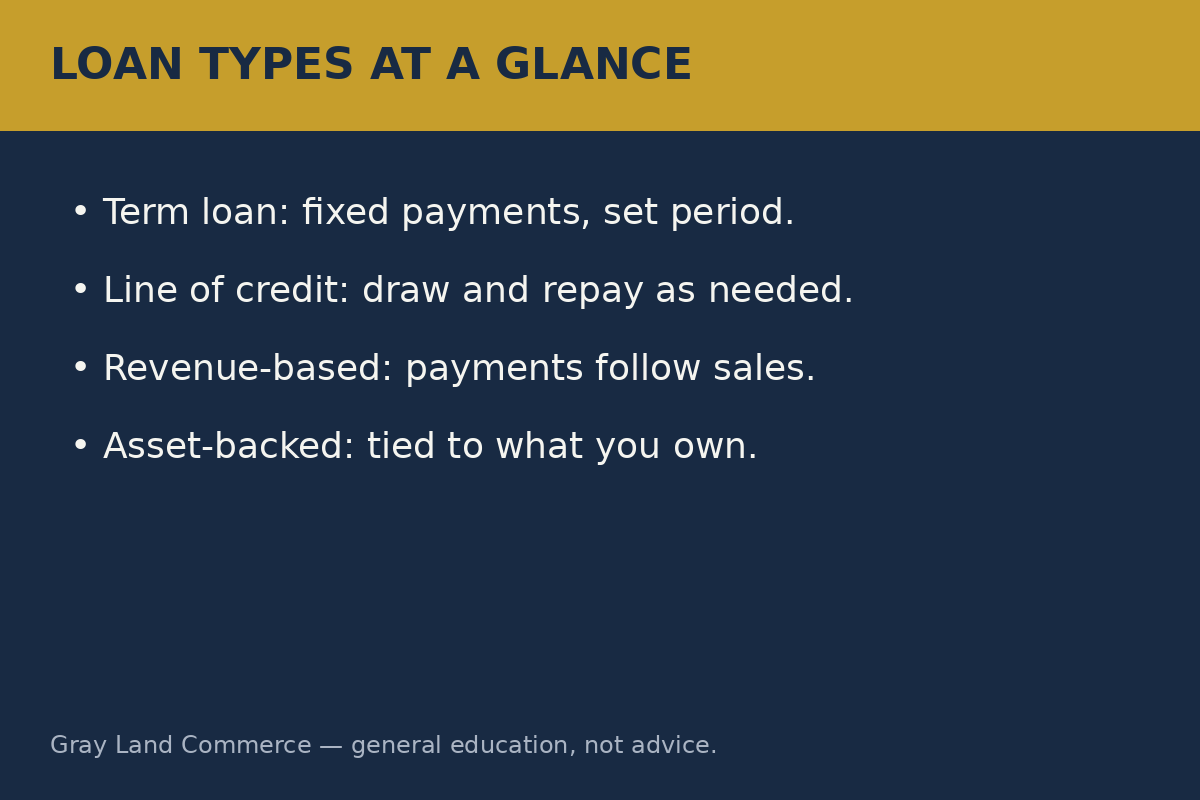
The Main Types, in Plain Terms
A term loan generally provides a lump sum repaid in fixed payments over a set period. Predictability is its strength; the obligation continues whether months are strong or slow. A business line of credit generally lets an owner draw what is needed, up to a limit, and repay it — flexibility is its strength, and discipline is its price, because an always-available balance can quietly become permanent debt. Revenue-based funding generally advances funds repaid as a share of sales, so payments rise and fall with revenue; that flexibility can cost more overall than conventional credit. Equipment and asset-backed options tie borrowing to something purchased or owned, which changes both eligibility and what is at risk if payments fail.
None of these is ‘best’ in general. A seasonal business smoothing a predictable dip uses credit differently than a shop funding a one-time expansion. The type should follow the job the money has to do, and the repayment should be scheduled to finish when that job stops paying back.
What Lenders Generally Look At
Across types, lenders commonly review time in business, revenue patterns, bank statements, credit history of the business and often the owner, existing debts, and the purpose of the funds. Documentation is not red tape for its own sake; it is how a lender prices risk. Owners who keep clean books, separate business and personal accounts, and can explain a slow month with records rather than adjectives generally present a stronger file — whatever door they knock on.
A current trend worth noting: more of the early process now happens online, with faster document uploads and quicker preliminary answers. Speed at the application stage, though, says nothing about total cost. The trend has made comparing offers easier, too — an owner can hold two or three written offers side by side in a way that was harder a generation ago. That comparison, not the first offer, is where the money is saved.
Questions to Ask Before Signing
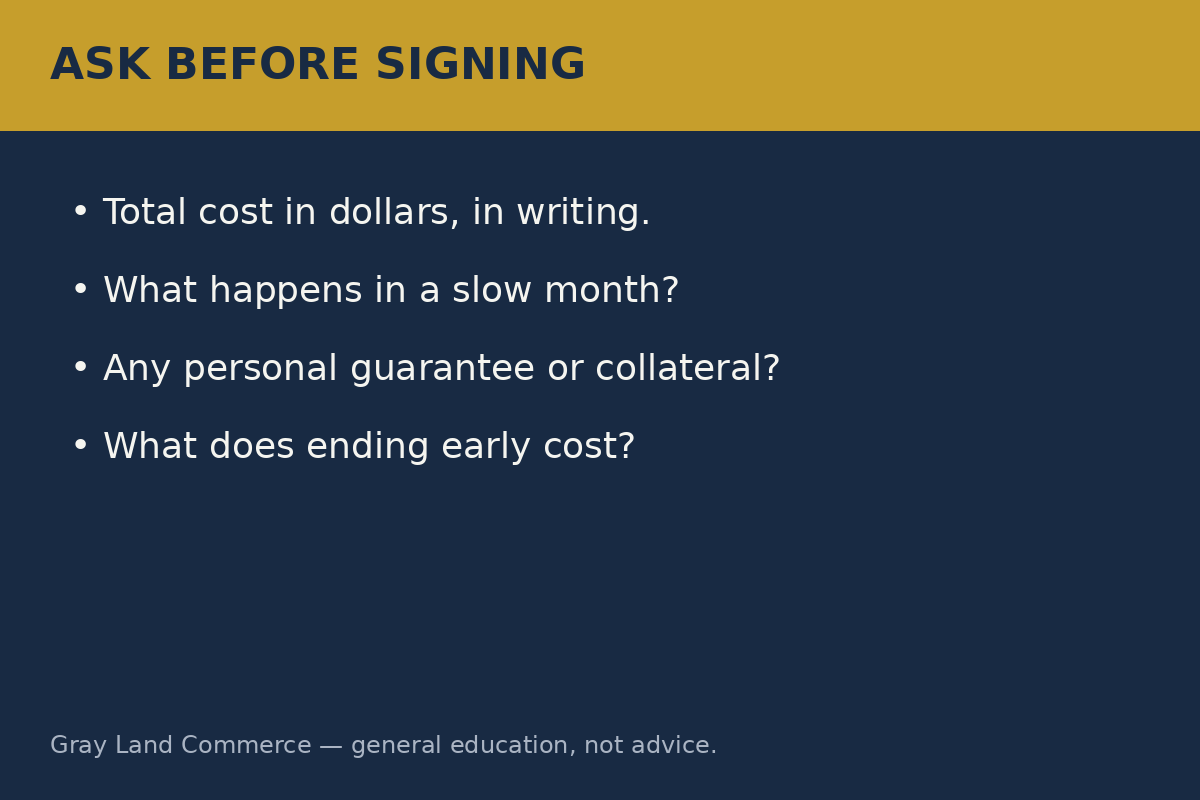
Ask for the total cost in dollars over the full term, not just a rate or a payment. Ask what happens in a slow month, whether payments can pause or whether they continue regardless. Ask what personal guarantees or collateral are involved, what fees exist beyond the headline terms, what ending the agreement early costs, and get every answer in writing. A lender who welcomes those questions is showing you something; so is one who rushes past them.
Frequently Asked Questions
How much working capital can a Jackson business borrow?
Amounts vary widely by lender, loan type, revenue, credit profile, and documentation. The $50K–$250K range in this guide reflects a common planning band for established small businesses, not a promise that any business qualifies for any amount.
What is the difference between a term loan and a line of credit?
Generally, a term loan is a lump sum repaid on a fixed schedule, while a line of credit is a reusable limit you draw from and repay as needed. Term loans suit one defined expense; lines of credit suit recurring or unpredictable gaps.
Do working capital lenders require good credit?
Requirements differ by lender and product. Conventional lenders typically weigh credit heavily; some alternative funders weigh revenue and bank activity more. Stronger credit and cleaner records generally improve the options and terms available.
Is this guide financial advice or a lender recommendation?
No. It is general education about loan types and evaluation questions. It recommends no specific lender, quotes no rates as facts, and guarantees no approval. Borrowing decisions belong with qualified financial and legal advisors who know your business.
Want Jackson’s top local stories in one place? Browse the businesses shaping the area in the NeighborClick Local directory — JOIN the FREE Private Insider List for local stories, business spotlights, community updates and even if you don’t have business you’ll be an Insider.


Comments