
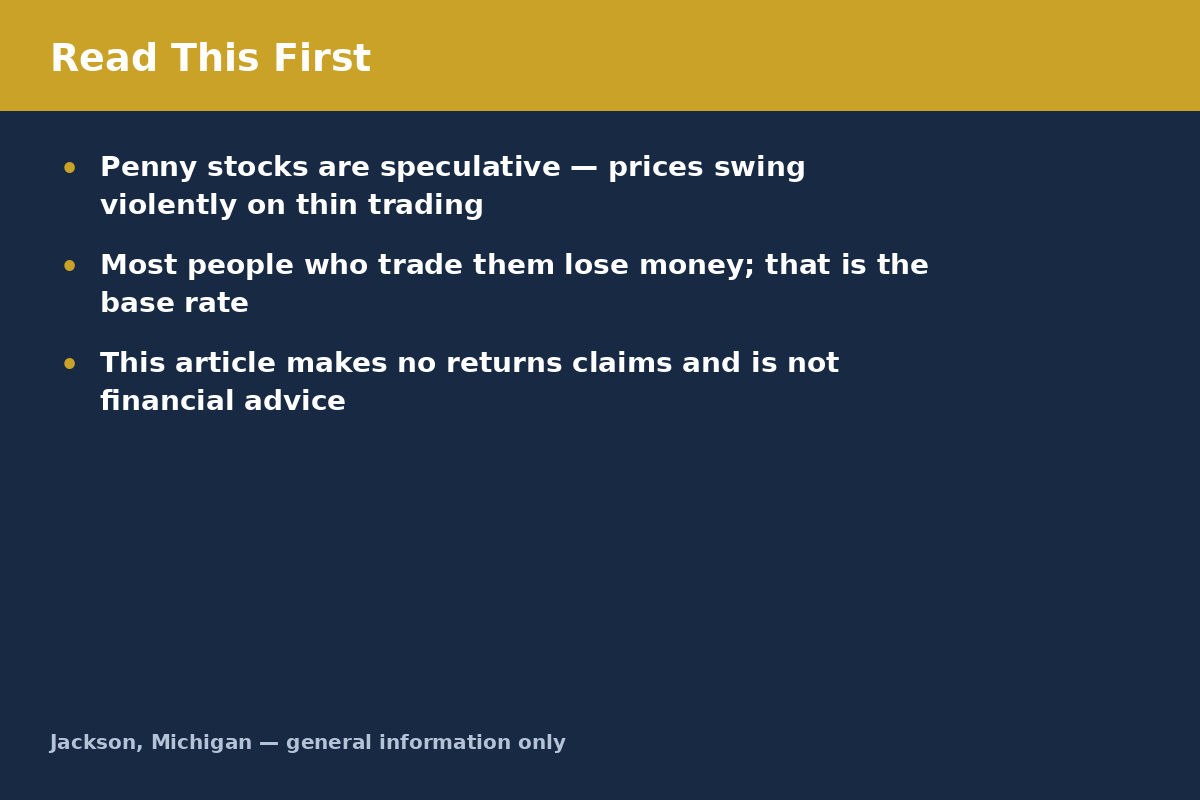
IMPORTANT — READ FIRST: This article strips the income framing out of its title and replaces it with risk education. Penny stocks are speculative. Most people who trade them lose money. There are no returns claims in this piece, no strategy is promised to reach any monthly amount, and nothing here is financial advice. Anyone considering any trading should understand they can lose some or all of the money they put in.
COMMENTARY: The honest scientific question behind a title like this is not ‘how do I hit a number?’ It is ‘what does the evidence say about how these markets actually behave — and why do the outcomes skew so hard against beginners?’ That is the question this piece answers.
The Argument
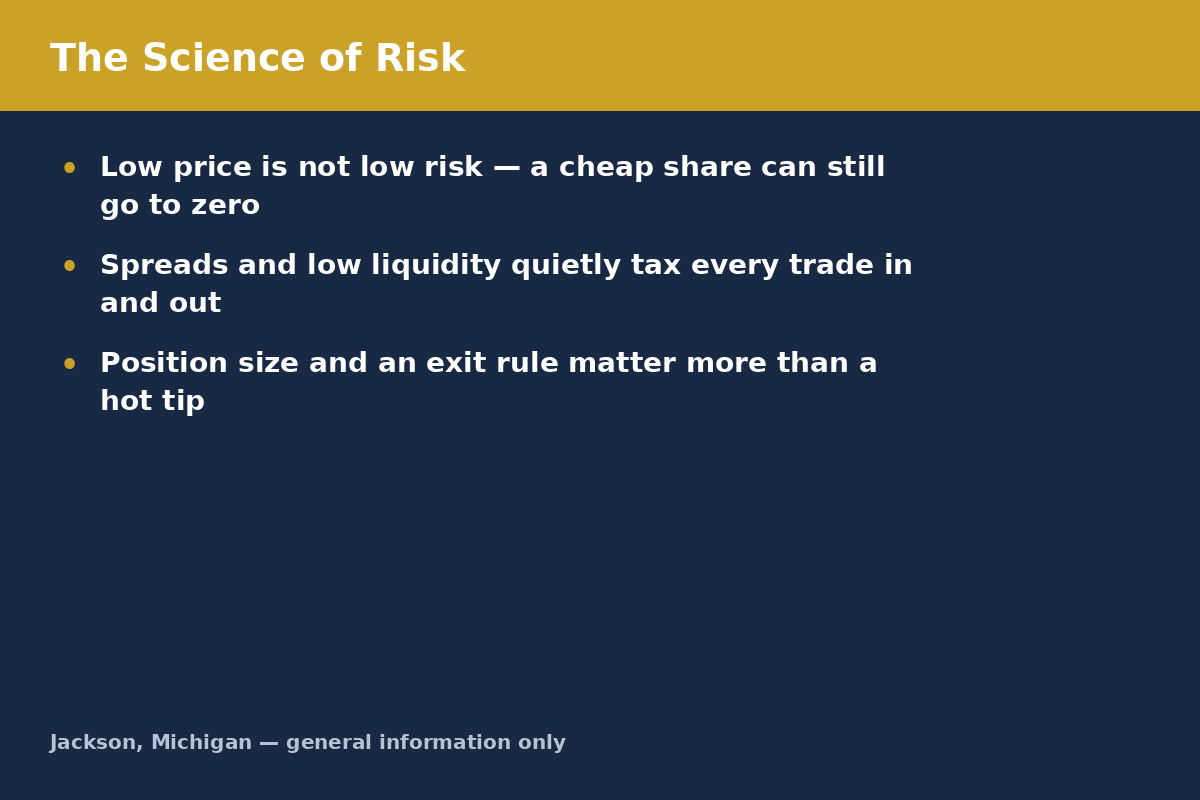
FACT: Penny stocks are low-priced shares that typically trade in low volumes, with wide gaps between buying and selling prices, limited public information, and sharp price swings. Those structural features — not a lack of effort by traders — are the main reason losses are so common.
COMMENTARY: That is the argument: the science points away from the fantasy and toward the structure. A very cheap share is not a bargain by default; it is usually cheap because the underlying business is small, unproven, in distress, or barely traded. Building toward any income from speculation is not a plan the evidence supports — building risk literacy is.
Volatility, Liquidity, and the Spread: The Three Costs
Volatility means prices can jump or fall by large percentages in a day, in both directions, often on no real news. Liquidity means how easily you can actually sell: in a thinly traded stock, there may be few buyers when you want out. The spread is the gap between the price you can buy at and the price you can sell at — in penny stocks that gap alone can consume a large share of any small gain before it starts. Together, these three act like a strong headwind on every trade.
Why Tips and Hype Are Structurally Dangerous
Low-information markets are where promotion thrives. A glowing tip about an obscure company, spread through messages and social posts, can push a thin price up briefly — and the people promoting may be selling into that rise while latecomers buy. Regulators have warned about this pattern for decades. The scientific habit that protects a beginner is boring on purpose: check whether a company files real financial reports, be suspicious of urgency, and treat any guaranteed-return claim as a disqualifier.
If Someone Still Chooses to Learn This Market
Education-first learners study with paper trading (simulated, no real money), read filings rather than forums, learn position sizing — risking only a tiny, affordable-to-lose amount on any single idea — and keep a written journal of every decision and outcome. Many conclude, after honest study, that their time and savings are better aimed at steadier work and diversified, long-term approaches discussed with a licensed professional. That conclusion is a success of risk education, not a failure of ambition.
Frequently Asked Questions
Can penny stocks reliably produce $5K a month?
No reliable method exists, and this article claims none. Penny stocks are speculative, most traders lose money, and any source promising a monthly amount from them should be treated as a warning sign, not a plan.
Why do most penny stock traders lose money?
Because of structure: extreme volatility, low liquidity that makes selling hard, wide buy-sell spreads that tax every trade, limited company information, and promotion schemes that benefit early sellers at late buyers’ expense.
Does a low share price mean low risk?
No. A share priced in pennies can still fall to zero, losing everything put into it. Price per share says little about a company’s health; filings, debt, revenue, and trading volume say more.
Is this financial advice?
No. This is general risk education only. Trading decisions are personal and risky; anyone considering them should do independent research and consider speaking with a licensed financial professional.
Want Jackson’s top local stories in one place? Browse the businesses shaping the area in the NeighborClick Local directory — JOIN the FREE Private Insider List for local stories, business spotlights, community updates and even if you don’t have business you’ll be an Insider.


Comments