
COMMENTARY: Voice search taught customers to ask a phone for a nearby business. The next wave is different, and this piece is deliberately about that next wave — not ‘near me’ search. Future voice recognition is about systems that know who is speaking, work hands-free in the middle of a task, and turn spoken words into records, orders, and confirmations inside the shop itself.
For a Jackson, Michigan small business, that future looks less like a gadget and more like a quiet assistant on the stockroom shelf — one that raises real questions about consent and privacy alongside the convenience.
The Argument
FACT: Voice recognition is moving from transcribing words to identifying speakers and acting on commands in context. Those are distinct capabilities, with distinct risks, and businesses will adopt them at different speeds.
COMMENTARY: That is the argument: the change coming is recognition, not just search. Speaker identification, in-store voice biometrics, and hands-free inventory and ordering will change daily operations first — and the businesses that handle consent honestly will earn the trust to use them.
Speaker ID: Knowing Who Is Talking
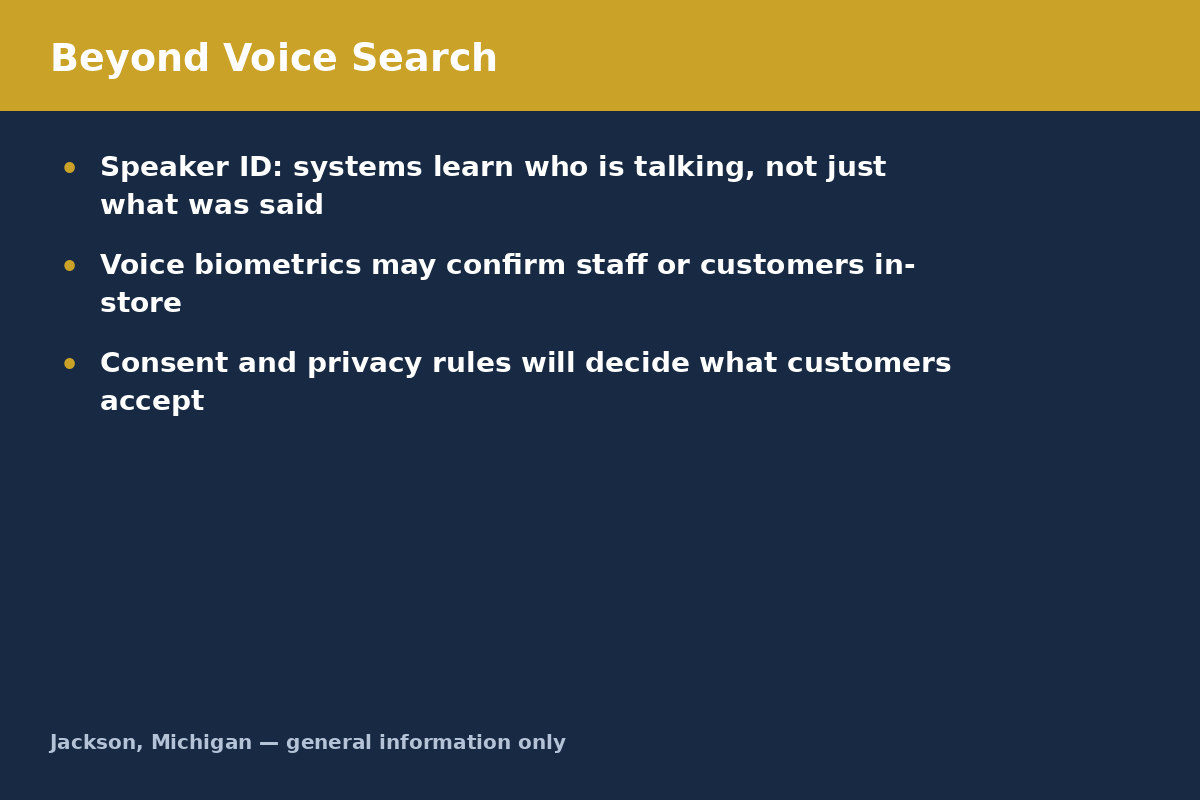
Speaker identification means a system can distinguish one voice from another — the manager’s voice authorizes a refund, a staff voice only records a count. In practice that could mean role-based voice commands: anyone can ask what is in stock, but only an authorized voice can place the order or open the register functions. Expect early versions to be imperfect with noise, illness, and accents, which is why a human confirmation step will remain part of any sensible setup.
Voice Biometrics In-Store: Convenience With a Consent Line
Voice biometrics uses the characteristics of a voice as an identifier, much as a fingerprint is used on a phone. A returning customer might one day confirm a pickup or a payment by speaking. The caution is as important as the convenience: a voiceprint is personal data. Businesses should expect clear consent, an easy non-voice alternative, and plain disclosure to be the price of using it. A shop that asks permission well will be trusted; one that records quietly will not.
Hands-Free Inventory and Ordering
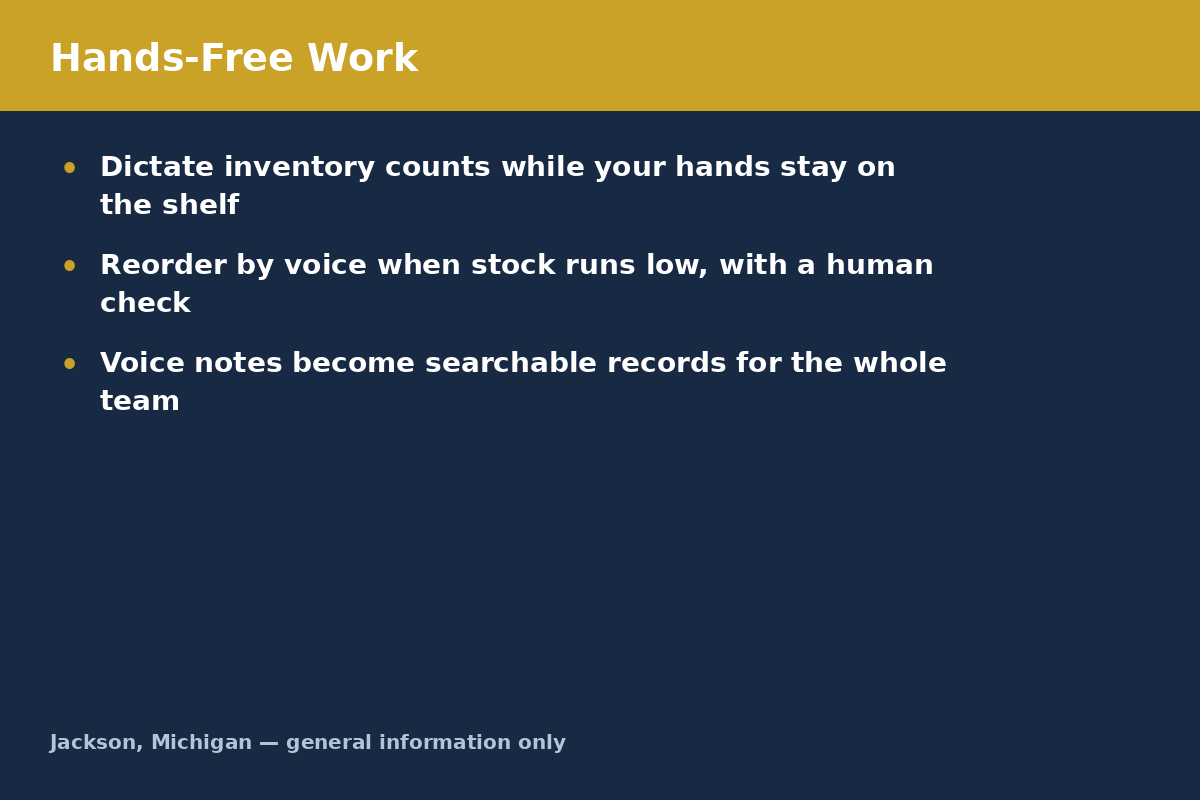
The most practical near-term change needs no biometrics at all. Hands stay on the shelf while the owner dictates counts; the system totals, flags low stock, and drafts a reorder for a human to approve. In a kitchen, a workshop, or a stockroom — anywhere hands are busy, gloved, or holding something — speaking a note that becomes a searchable record is a genuine time saver. This is where most Jackson shops will feel voice AI first.
Frequently Asked Questions
How is future voice recognition different from voice search?
Voice search finds information, like a nearby business. Future voice recognition identifies who is speaking, acts on hands-free commands during work, and creates records and orders inside the business — a different job entirely.
What is speaker identification?
Speaker identification is technology that distinguishes one person’s voice from another’s, so a system can apply different permissions — for example, only a manager’s voice can authorize certain actions.
What are voice biometrics, and what is the concern?
Voice biometrics uses voice characteristics as an identifier to confirm identity. The concern is privacy: a voiceprint is personal data, so consent, disclosure, and a non-voice alternative matter.
What voice tool will small businesses likely use first?
Hands-free inventory and note-taking — dictating counts, low-stock flags, and voice notes that become searchable records, with a human approving any order before it is placed.
Want Jackson’s top local stories in one place? Browse the businesses shaping the area in the NeighborClick Local directory — JOIN the FREE Private Insider List for local stories, business spotlights, community updates and even if you don’t have business you’ll be an Insider.


Comments