

The Argument
A burst pipe is a clock problem before it is a plumbing problem. In the first five minutes, one valve can limit how much water enters your home. In the next 24 to 48 hours, drying helps control mold risk. Your insurance outcome can depend on showing reasonable care.
Jackson’s average December low is about 23.6°F, cold enough to put exposed plumbing at risk, though not a universal freezing threshold. This November has already brought a 28.9°F low on November 7. You do not need record cold to have trouble. You need to know where the water shuts off.
The First Hour
Stop the Water Before Making Calls
If a pipe has burst, shut off the main water valve before calling anyone, provided you can reach it safely.
- For a ball valve with a lever, turn it one-quarter turn. The handle should sit across the pipe.
- For a gate valve with a round handle, turn clockwise until it stops.
Do not start by searching for the split. Do not start with photographs. Stop the supply first.
If the house valve is missing, seized, or fails to stop the flow, the curb stop near the street is the backup. It requires a meter key. You can also call the City of Jackson Water Department.
Deal With Electricity Without Entering Water
Turn off electricity to the affected area at the breaker only if you can reach the panel without walking through standing water.
If you are unsure, stay out and call for help. Do not touch electrical equipment while standing in water.
That safety limit applies even if the water valve is on the other side of the room.
Drain the Lines and Protect the Water Heater
Once the supply is off:
- Open faucets, starting with the lowest faucet in the house.
- Let the lines drain and release pressure.
- If the water will remain off for hours, protect the water heater from heating an empty tank.
- Put a gas water heater on pilot or off. Turn an electric water heater off at its breaker, only with dry feet and a dry floor.
If you cannot do this safely, tell the plumber what remains on.
Document, Then Remove Water
Photograph and video all damage before cleanup. Capture the affected rooms, building materials, and personal property.
Then:
- Call a licensed plumber.
- Begin water removal and drying once the area is safe.
- Preserve your photographs and videos for the insurance claim.
The first hour is not about making the basement look normal. It is about stopping the source and reducing the damage.
Frozen or Burst? How to Tell
A Trickle Means Suspect Ice
Turn on a faucet. If only a trickle comes out, suspect a frozen pipe. Check other faucets, too. If more than one is affected, the frozen section may be serving a shared line.
No Leak Does Not Mean No Split
A frozen pipe may already be split while ice seals the opening. Water can escape when that ice melts.
That is why “it is frozen” and “it has burst” are not cleanly separate conditions. A pipe can be both frozen and split at the same time.
If water is escaping, follow the emergency shutoff sequence. If you cannot locate or reach the frozen section, call a licensed plumber.
Gentle Thawing Versus Waiting
Red Cross thawing guidance calls for keeping the faucet open and applying gentle heat:
- Use an electric heating pad, hair dryer, or towels soaked in hot water.
- A portable space heater must stay away from flammable materials and must never be left unattended.
- Start near the faucet and work back toward the frozen section.
- Never use a blowtorch, kerosene or propane heater, charcoal stove, or open flame.
- Keep electrical thawing equipment away from standing water.
An accessible pipe may take roughly 30 minutes to thaw with gentle heat. That is an estimate, not a guarantee. If you see no progress in about an hour, call a licensed plumber.
Why the Drip Works (It Is Not What You Think)
The main protection is pressure relief, not simply keeping water moving.
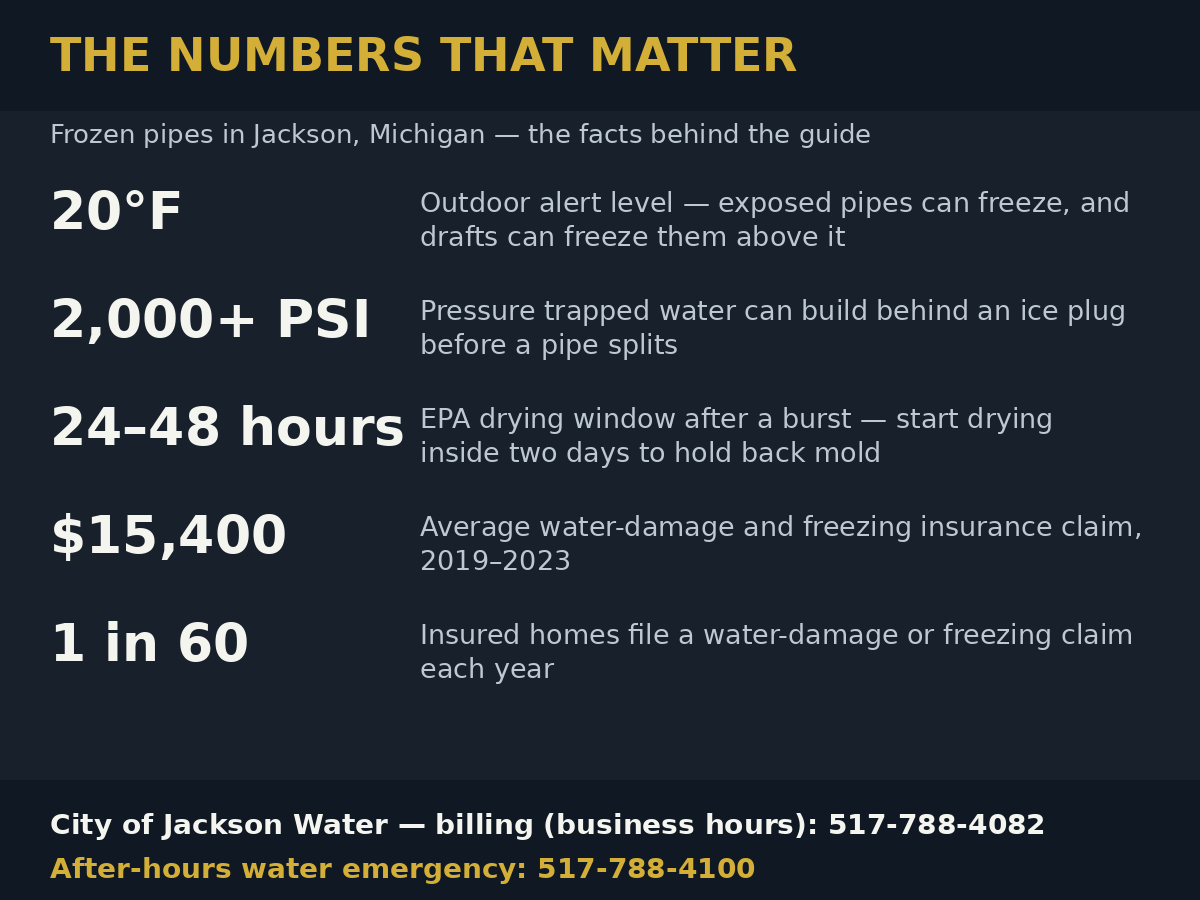
Water expands about 9% as it freezes. An ice plug can trap liquid water between the blockage and a closed faucet. As more ice forms, pressure can build past 2,000 PSI.
The break often occurs away from the ice, sometimes feet from the frozen spot.
An open, dripping faucet gives that pressure a way out.
For the precaution described here:
- Use the cold side.
- Aim for about one drip per second.
- Choose the faucet served by the most exposed pipe run.
The Red Cross recommends letting cold water drip from faucets served by exposed pipes during very cold weather.
Do not turn every faucet on and assume the house is protected. The vulnerable run matters most.
The 48-Hour Mold Clock
The EPA recommends drying water-damaged areas and items within 24 to 48 hours to help prevent mold growth.
That is a guideline, not a cliff edge. Mold can begin growing inside that window. It is not automatic afterward.
The controlling issue is moisture.
A Dry Floor Versus a Dry Room
After a burst pipe, water can remain:
- Behind drywall.
- Under carpet and carpet padding.
- Inside wall cavities.
Removing the puddle does not prove those places are dry.
During the first day, keep attention on both visible water and materials that absorbed it. Ask a plumber or drying professional about hidden moisture if you are unsure.
The EPA advises keeping indoor humidity below 60%. Where mold is present on hard surfaces, its guidance is to clean with detergent and water and dry the surface completely.
Do not wait until the second evening to think about drying. Stopping the leak and drying the space are two parts of the same job.
What Insurance Actually Pays For
Resulting Damage Versus the Failed Pipe
Homeowners insurance generally covers resulting damage from a sudden burst, subject to the policy’s terms. Freezing of a plumbing system is commonly listed as a covered peril.
The distinction that surprises people is this:
- Resulting damage to the home and personal property is generally covered.
- The failed pipe itself is generally not covered.
- Tear-out and replacement of building parts needed to reach the pipe may be covered.
That can mean coverage for opening and restoring part of a wall, but not for replacing the failed pipe itself.
Reasonable Care Versus an Automatic Payout
Freeze coverage commonly depends on reasonable care to maintain heat, or on shutting off the water and draining the system.
About 55°F is a practical minimum for an unattended home, consistent with Red Cross prevention advice.
Photographs and videos help establish the damage. Being able to explain the precautions you took also matters for the claim.
What May Be Excluded or Limited
Read these parts of your policy closely:
- Gradual leaks and seepage are generally treated as maintenance and excluded.
- Vacancy or unoccupancy provisions can restrict coverage. Periods often fall around 30 to 60 days, but wording varies.
- Mold remediation after a covered event may have a separate limited-fungi cap.
- The failed pipe is generally your repair expense, even when resulting damage is covered.
Do not assume that any absence triggers a vacancy exclusion. Ask how your policy defines vacancy and unoccupancy.
For scale, roughly one in 60 insured homes files a water-damage or freezing claim annually. The average claim is about $15,400 for 2019–2023.
The useful question is not just “Am I covered?” Ask which damage is covered, which repair is not, and what limit applies to mold.
Jackson, Michigan: Your Local Numbers and Your Shutoff
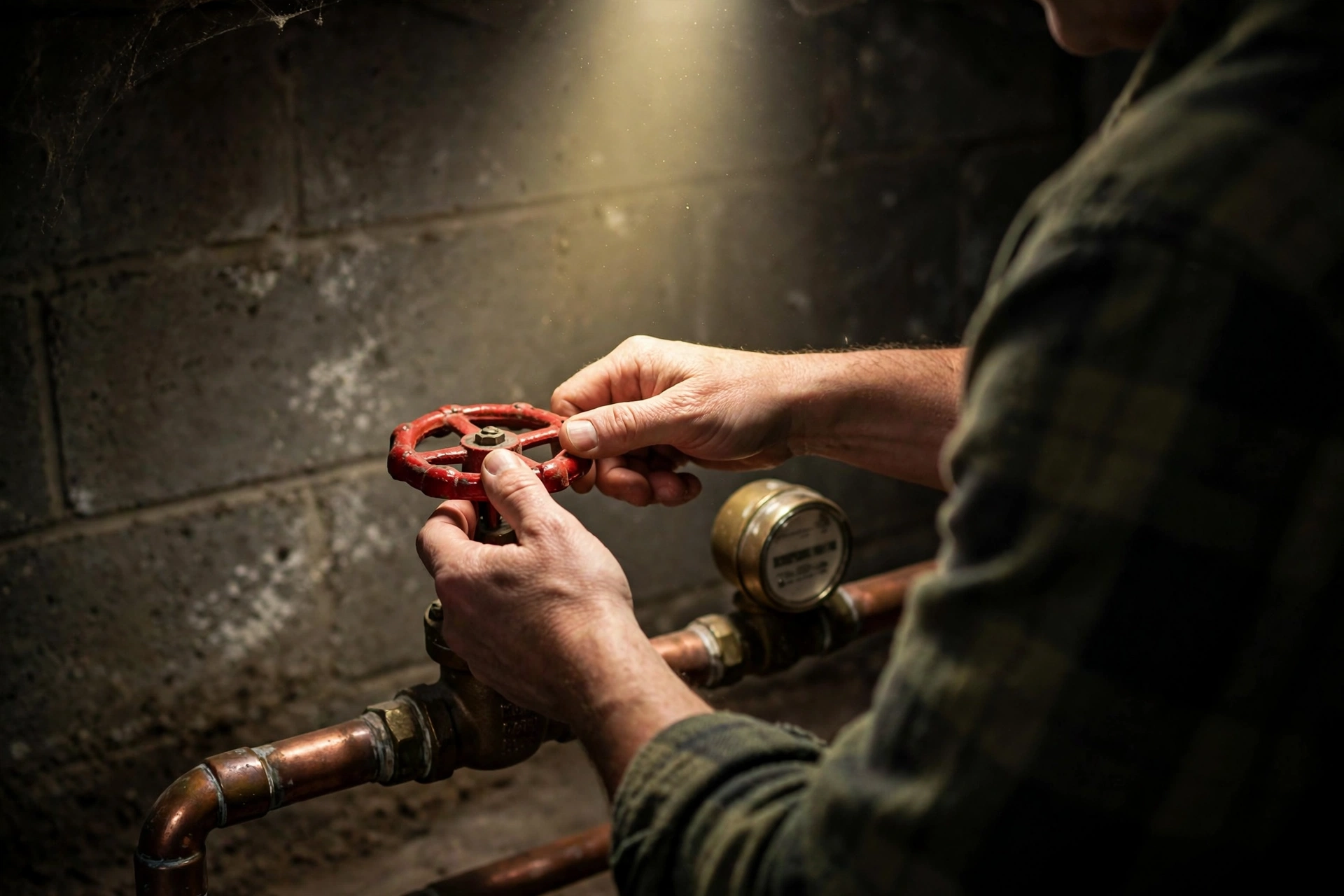
Find the Inside Valve Before the Street Valve
In a Michigan basement, start low on the front wall, the wall facing the street. Look beside or near the water meter, where the service line enters the house.
In a crawlspace home, look where the water line enters the crawlspace.
Older Jackson homes may still have original round gate valves. These can seize from disuse. Find and test yours before winter.
If the inside valve will not stop the flow, the curb stop near the street is the backup. It requires a meter key.
The City of Jackson lists:
- Utility Billing, business hours: 517-788-4082.
- After-hours water emergency: 517-788-4100.
These are City of Jackson contacts. The prevention and thawing instructions in this article come from the American Red Cross, not the city.
Twenty Degrees Is an Alert, Not a Boundary
About 20°F outdoors is an alert threshold associated with University of Illinois Building Research Council field tests and Texas A&M AgriLife guidance.
Drafts and unheated spaces can allow freezing above 20°F. Insulation and exposure time change the risk.
NOAA’s 1991–2020 normals for Jackson Reynolds Field put average lows at:
- November: about 32.1°F.
- December: about 23.6°F.
- January: about 17.5°F.
Jackson’s first frost typically falls October 11–20. This November recorded lows of 28.9°F on November 7 and 32.0°F on November 13.
Prepare before a deep-freeze warning. Your basement plumbing does not experience the same temperature as the forecast for the whole city.
Before the Next Cold Snap
Protect the Pipes Versus Hoping the Furnace Is Enough
The American Red Cross recommends these precautions:
- Insulate pipes in unheated basements, crawlspaces, attics, garages, and under kitchen cabinets.
- Drain and store outdoor hoses.
- Close inside valves supplying outdoor hose bibs, and leave the outside bibs open.
- Keep garage doors closed if water supply lines run through the garage.
- Open kitchen and bathroom cabinet doors so warm air reaches the plumbing.
- Move cleaning products out of children’s reach before leaving cabinets open.
- During very cold weather, let cold water drip from faucets served by exposed pipes.
- Keep the thermostat at the same setting day and night during cold snaps.
- When away, leave the heat on at no lower than 55°F.
In an older house, start with the plumbing you can see. Find the shutoff. Identify exposed runs. Then work through the list before the next cold snap.
FAQ
What should I do first if a pipe bursts?
Shut off the main water valve before calling anyone, if you can reach it safely. Never cross standing water where electricity may be involved.
How do I know if my pipe is frozen or already burst?
A trickling faucet suggests freezing. A split may remain sealed by ice until thawing. Check other faucets and the affected area for leaks.
Will my frozen pipes thaw on their own, and how long does it take?
They may thaw as conditions warm, but there is no dependable waiting time. Gentle thawing of an accessible pipe takes roughly 30 minutes. If there is no progress in about an hour, call a licensed plumber.
Can a frozen pipe burst after it starts thawing?
Yes. A pipe can also split earlier and begin leaking only when the ice sealing the opening melts. Watch the area during thawing.
How can I tell if a pipe burst behind the wall?
You may not be able to confirm it from the faucet alone. A frozen line can remain sealed by ice. Water appearing from the wall requires the shutoff sequence and a plumber, not more waiting.
Is a burst pipe covered by homeowners insurance?
Resulting damage from a sudden burst is generally covered, subject to policy terms. Freezing claims commonly depend on reasonable care to maintain heat or shut off and drain the system.
Does insurance pay to fix the pipe itself, or just the water damage?
Generally, the resulting damage, not the failed pipe. Coverage may include tearing out and replacing building parts needed to reach it. Confirm your policy’s wording.
Do I drip the hot or cold faucet, and how much of a drip?
Use cold water, about one drip per second, at the faucet served by the most exposed run. Red Cross guidance specifies cold water from exposed pipes.
Can I use a space heater to thaw a frozen pipe?
The Red Cross allows a portable space heater kept away from flammable materials. Never leave it unattended or use electrical equipment while standing in water.
How fast does mold grow after a burst pipe?
The EPA recommends drying within 24 to 48 hours. Growth can begin within that period; it is not guaranteed afterward. Moisture control matters more than the clock alone.
My pipes thawed and nothing leaked. Am I safe?
No visible leak is encouraging, not a guarantee. Check other faucets and the affected area. An inaccessible frozen section or suspected hidden damage calls for a licensed plumber.
What happens if a pipe freezes while I’m away on vacation — will insurance still pay?
It may. Reasonable care to maintain heat, or shut off and drain the system, matters. Vacancy and unoccupancy terms may also apply. A vacation alone does not settle the claim.
For Jackson homeowners, local help starts with the city when the supply will not shut off, a licensed plumber for the failed line, and qualified cleanup help for wet materials. Community resources may help you find support. Stop the water safely, then take the next job one step at a time.
Want Jackson’s top local stories in one place? Browse the businesses shaping the area in the NeighborClick Local directory — JOIN the FREE Private Insider List for local stories, business spotlights, community updates and even if you don’t have business you’ll be an Insider.


Comments